Inflammation and Cancer
By Jeannine Walston
What is inflammation? What is the relationship between inflammation and cancer?
Inflammation is commonly known as heat or fire in the body, triggered by tissue damage from injury, infection, autoimmune responses, exposure to toxins, and a range of other inflammatory triggers.
In the process, inflammation may produce swelling, irritation, redness, and pain. The damaged area attracts immune cells, which produce inflammatory chemicals that help kill toxins and stimulate the regrowth of cells and blood vessels to mend the wound. That’s acute inflammation. Many inflammatory cases are acute, with chemical production ceasing once the tissue is restored.
But sometimes the inflammatory response persists. The alarm reaction in the body continues in the presence of a perceived ongoing injury from inflammatory offenders. The ongoing inflammatory panic over a wound-repair attempt gone wrong creates a hostile environment. Chronic inflammation in the body triggers a confused, chronic immune response, creating chaos rather than repair. The result is a terrain and overall environment in the body that supports cancer.
“Interestingly, inflammation functions at all three stages of tumor development: initiation, progression, and metastasis. Inflammation contributes to initiation by inducing the release of a variety of cytokines and chemokines that alert the vasculature to release inflammatory cells and factors into the tissue milieu, thereby causing oxidative damage, DNA mutations, and other changes in the microenvironment, making it more conducive to cell transformation, increased survival, and proliferation. Chronic inflammation appears to contribute to tumor progression by establishing a milieu conducive to the development of different cancers.”
-National Cancer Institute (NCI) Inflammation and Cancer Think Tank
Similar mechanisms are associated with inflammation, the immune response, and cancer, including decreased cell death (apoptosis), increased cell growth, and increased blood supply (angiogenesis). During acute inflammation, those processes allow injured tissue to repair. During chronic inflammation and cancer, those processes provide essential support to cancer cell growth.
Inflammation appears to both initiate and fuel cancer. The initiation is linked to a chronic state of inflammation and immune response. The fuel involves various ways cancer cells produce inflammation to sustain their growth. Ultimately, inflammation and cancer reciprocally feed one another.
“…the National Cancer Institute brought out a report highlighting inflammation research too often ignored by oncologists. The report describes in great detail the processes by which cancer cells manage to lead the body’s healing mechanisms astray. Just like immune cells gearing up to repair lesions, cancer cells need to produce inflammation to sustain their growth. To this end, they begin an abundant production of the same highly inflammatory substances—cytokines, prostaglandins, and leukotrienes—seen in the natural reparation of wounds. They act as chemical fertilizers promoting cell reproduction—in this case, cancer cell reproduction. Growing tumors use these substances to help themselves develop and to make the barriers surrounding them more permeable. The very process that enables the immune system to repair lesions and pursue enemies in all the body’s recesses is diverted for the benefit of cancer cells. They exploit it to spread and reproduce. Thanks to the inflammation they create, they infiltrate neighboring tissues, slip into the bloodstream, migrate, and establish remote colonies called metastases.”
–David Servan-Schreiber, MD, Anticancer
What is the connection between inflammation and nuclear factor kappa beta (NF-kB)?
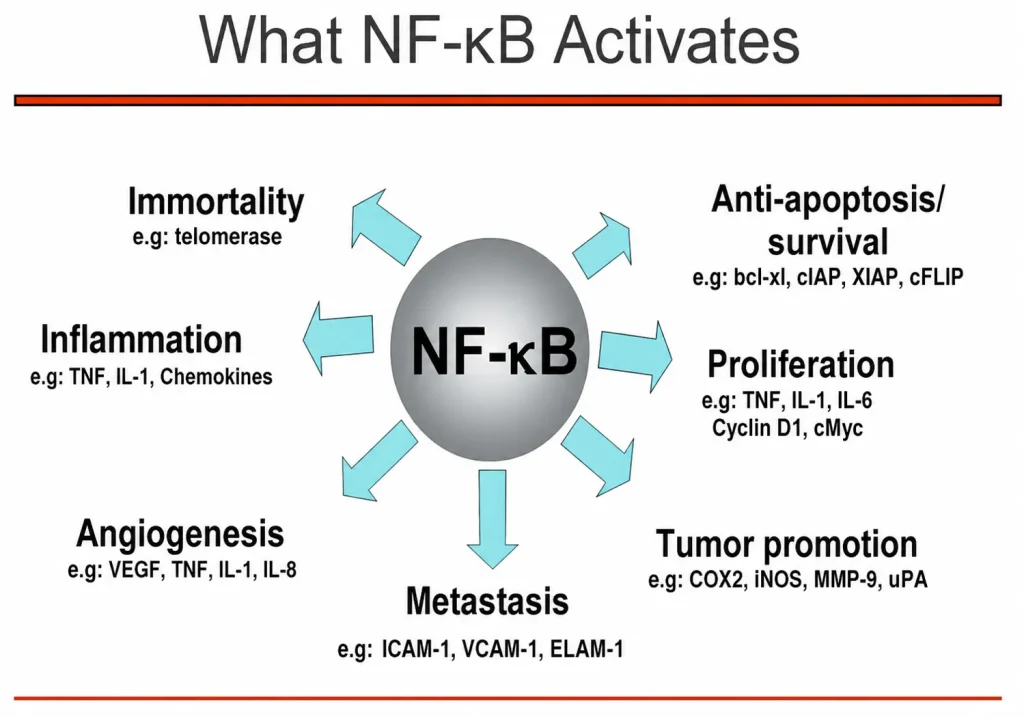
A major mechanism through which inflammation fuels cancer involves the production and activity of a protein called nuclear factor kappa beta (NF-kB). Cancer-promoting triggers of nuclear factor kappa beta include injury, other inflammatory offenders such as diet, acidity, carcinogens, bacteria, viruses, oxidation, stress, radiation, chemotherapy, environmental stimuli, and additional factors. Nuclear factor-kappa beta is considered a master switch in cancer, accounting for approximately 95% of all cancers. Research indicates that nuclear factor kappa beta decreases cancer cell death (apoptosis) and increases cancer cell growth, tumor blood supply (angiogenesis), invasion, and metastasis (1-5). Nuclear factor-kappa beta also fuels inflammation through COX-2 enzymes and cytokines such as interleukin-1 (IL-1), interleukin-6 (IL-6), and interleukin-8 (IL-8). Studies suggest that high levels of IL-6 are correlated with shorter survival in some people with cancer. In addition to promoting cancer invasion, IL-6 stimulates vascular endothelial growth factor (VEGF), which increases blood supply to tumors through angiogenesis.
What is the relationship between inflammation and cancer survival? What are the potential benefits of low inflammation levels in the body?
Published research demonstrates that inflammatory markers correlate with cancer.
Low levels of inflammation appear to indicate reduced cancer risk and improved cancer survival.
High inflammatory levels appear to indicate increased cancer risk and poorer prognosis. Inflammation also decreases the quality of life, impairs immune functions, plays a central role in cancer cachexia, and lowers the toleration of some anticancer therapies.
Research indicates that measuring inflammation may predict survival time for many cancers. Some cancer studies suggest that people with the lowest levels of inflammation were twice as likely to live through the next several years.
Low inflammation levels also support the prevention, control, and reversal of inflammatory conditions associated with other health problems.
What are inflammatory offenders?
- Smoking
- Alcohol
- Indoor and outdoor pollution
- Sleep deficit
- Extreme exercise
- Unhealthy dietary fats such as excess omega-6, saturated, and trans fats
- Unhealthy carbohydrates, such as excessively high-glycemic index foods
- Unhealthy cooking methods such as high-flame or high-heat methods, including charcoal grilling and deep frying
- Being overweight, especially with excess abdominal fat
- Blood sugar imbalances
- High levels of stress
- Ongoing emotional toxicity
What are some natural anti-inflammatory strategies?
Anti-inflammatory strategies include specific foods and supplements, exercise, balance in body, mind, and spirit, and the elimination of environmental toxins.
What are more specific natural anti-inflammatory products, such as an anti-inflammatory diet, anti-inflammatory herbs, and supplements?
To help strongly block nuclear factor-kappa beta (also called the NF-kB inhibitor), central to fueling inflammation and cancer, Jeanne Wallace, Ph.D., CNC, an expert on cancer-fighting foods, references some of the following natural agents against nuclear factor-kappa beta.
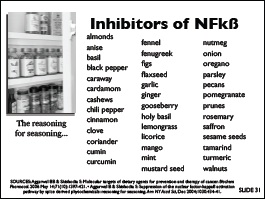
Almonds, anise, basil, black pepper, caraway, cardamom, cashews, chili pepper, cinnamon, clove, coriander, cumin, curcumin, fennel, fenugreek, flaxseed, garlic, ginger, gooseberry, holy basil, lemongrass, licorice, mint, mustard seed, nutmeg, onion, oregano, parsley, pecans, pomegranate, rosemary, saffron, sesame seeds, tamarind, turmeric, walnuts
In Life Over Cancer, Keith Block, MD, references the following anti-inflammation diet and supplements. The optimal anti-inflammatory supplements for each individual may depend on the specific inflammatory molecules present at high levels.
- Salicylate-rich foods
- Wintergreen, turmeric, tomatoes
- Flavonoid-rich vegetables and fruits
- Artichokes, broccoli, cucumbers, onions, parsley, spinach, sweet potatoes, tomatoes, zucchini
- Apples, apricots, blackberries, blueberries, cantaloupe, cherries, cranberries, prunes, raspberries, red grapes, strawberries, tart cherries
- Spices
- Basil, bay leaves, cayenne pepper, fresh ginger root, mint, mustard, nutmeg, oregano, rosemary, sage, thyme, turmeric, curry
- Supplements
- An optimal supplement plan is best customized by a qualified provider. Some recommendations may also vary. Some anti-inflammation supplements can include the following: Omega-3 fish oil, bromelain, vitamin D, vitamin C, garlic extract, stinging nettle leaf extract, resveratrol, luteolin, quercetin, curcumin, ginger extract, grape seed extract, boswellia, flower pollen extract, vitamin K1 or K2, alpha-lipoic acid, and mixed tocopherols, among others.
What tests measure inflammation?
Studies suggest that high-sensitivity C-reactive protein is an important prognostic marker for cancer survival. These findings appear to be independent of race, tumor stage, and body mass index. There is some consensus among integrative cancer care providers that high-sensitivity C-reactive protein levels below 1.0 mg/L are indicative of a low risk of cancer.
What is the history of anti-inflammatory agents?
Anti-inflammatory substances, such as curcumin in turmeric, have been used in some healthcare systems for several thousand years. Research into the relationship between inflammation and disease began in the 1800s. German scientists observed a link between inflammation and cancer in the mid-1800s. An increasing number of studies investigating the association between inflammation and cancer, as well as anti-inflammatory agents, have occurred over the last few decades.
For More Information
- Life Over Cancer by Keith Block, MD
- Anticancer by David Servan-Schreiber, MD, PhD
- The Definitive Guide to Cancer, 3rd Edition: An Integrative Approach to Prevention, Treatment, and Healing by Lise Alschuler, ND, and Karolyn A. Gazella
- Healing Spices: How to Use 50 Everyday and Exotic Spices to Boost Health and Beat Disease by Bharat B. Aggarwal, PhD